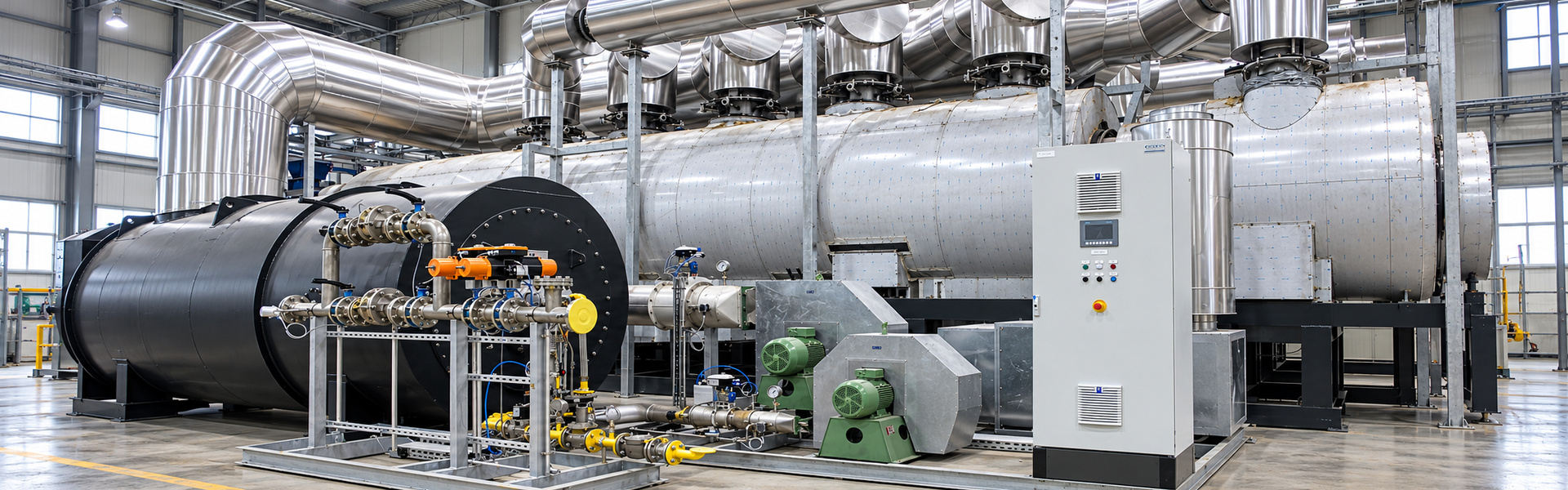
Tire Pyrolysis in a Rotary Kiln
Waste tires are a dense tangle of rubber, steel and carbon. An indirect-fired rotary kiln heats shredded tires to roughly 400–550 °C without oxygen until the rubber cracks into oil vapour and gas, leaving steel and carbon-rich char behind — all in one continuous process.
Why the kiln suits tires
Tires arrive shredded, with steel wire embedded and a wide particle-size spread. A rotary kiln's tumbling action handles that variability while maintaining even heat transfer, and its indirect firing keeps oxygen out so the rubber cracks rather than burns.
What the process recovers
The vapour condenses into tire pyrolysis oil; the non-condensable gas is recycled to help fuel the process; and the solid stream yields recovered steel and carbon char, upgradable to recovered carbon black — a drop-in substitute for virgin carbon black in rubber and plastics.
The engineering requirement
Steel wire, carbon deposition and the need for a sealed oxygen-free atmosphere make tire pyrolysis one of the more demanding kiln duties. Seal integrity, heat-transfer consistency and clean solids handling are what separate a commercial plant from a demonstration unit.