How a Rotary Kiln Works
Three things do the work: rotation, a slight incline, and controlled heat — together they set how long material stays hot, and how evenly.
The material path
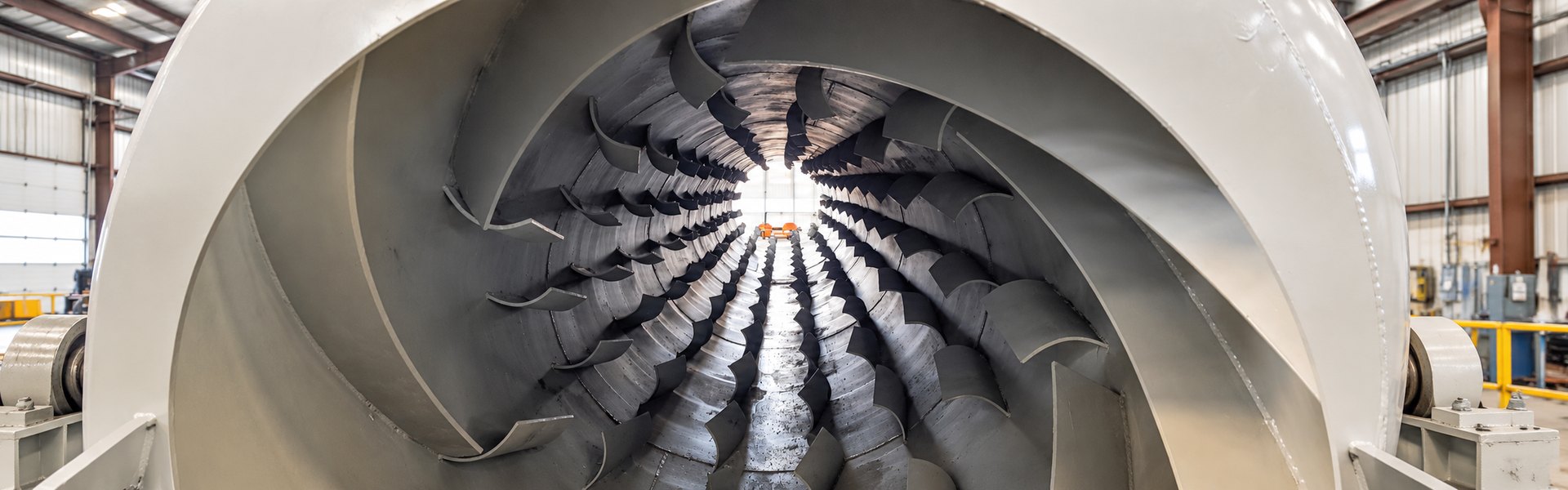
Feed enters at the raised end. Gravity and the incline pull it slowly toward the discharge end, while rotation keeps the bed rolling and mixed rather than sliding as a static layer. The result is a continuous, well-mixed bed moving at a predictable rate.
Residence time
How long a particle spends in the kiln is set by the length, the incline (slope) and the rotation speed — and it is the single most important process variable. Too short and the material is under-processed; too long and you waste energy and risk over-treatment.
Heat transfer
Heat can reach the bed directly — a flame or hot gas passing over the material — or indirectly, through the shell from an external burner. Direct firing is efficient for processes that tolerate contact with the gas; indirect firing is essential when the atmosphere must stay oxygen-free, as in pyrolysis.
Atmosphere control
Seals at each end hold the kiln's internal atmosphere: air in for combustion processes, inert gas or a tightly controlled oxygen level for pyrolysis and reduction processes. The rotating seals are what let a kiln maintain a gas-tight environment while turning.